
What Can Dogs Eat on Thanksgiving?
PawMD
November 10, 2026
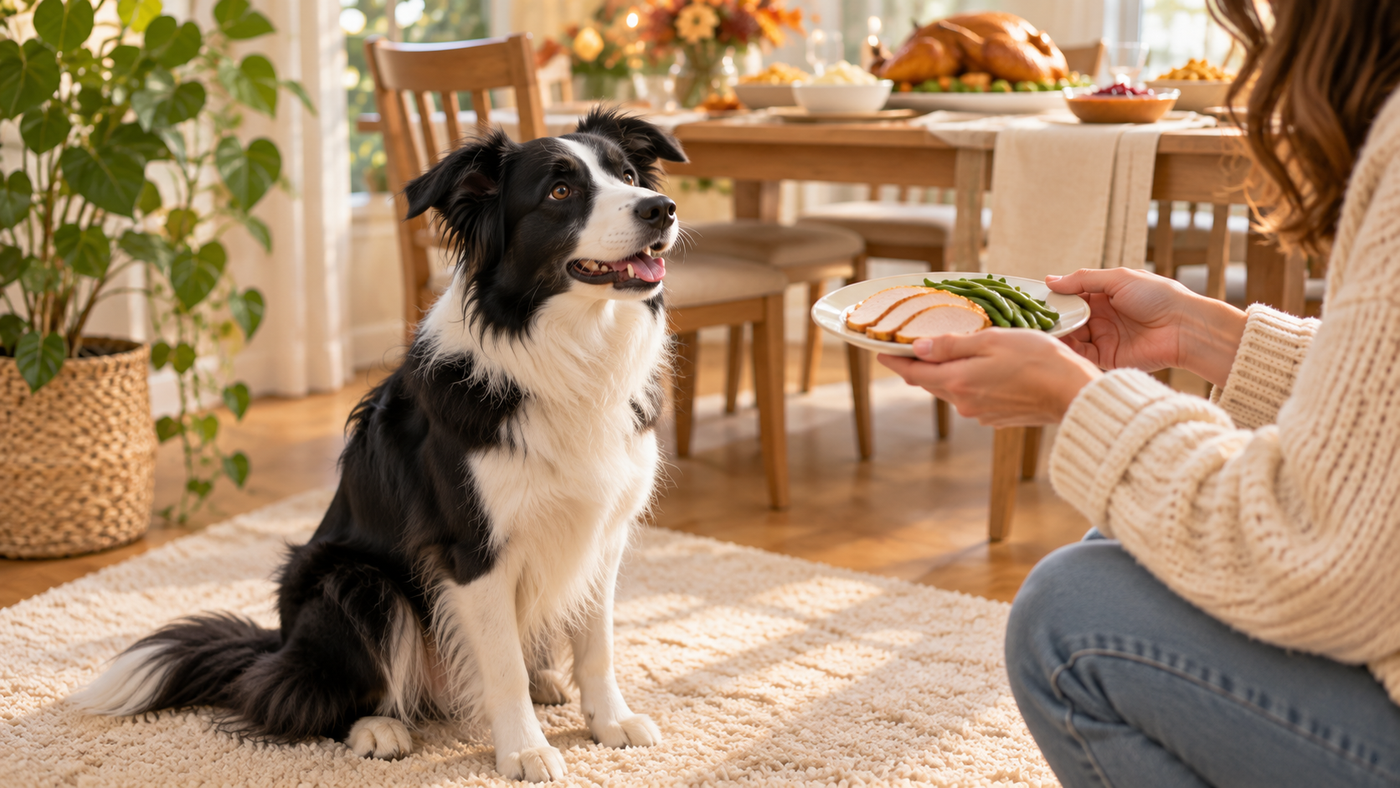
The turkey just came out of the oven, and under the table a pair of hopeful eyes is doing the most persuasive work of the day. A well-meaning guest is about to slip down a scrap of skin or a bite of stuffing.
Here's the short answer: a few small, plain bites can be a fine Thanksgiving treat for most dogs. Most of the holiday plate is not. You can share a little plain cooked turkey breast (skinless and boneless), plain cooked sweet potato or pumpkin (not pie filling), plain green beans or carrots, or plain apple slices without the core or seeds. Skip cooked bones, turkey skin, gravy, stuffing, onions and garlic, grapes and raisins, chocolate, sugar-free sweets with xylitol, raw yeast dough, and alcohol. Corn cobs, twine, and foil can get stuck if they're swallowed.
If your dog already got into something they shouldn't, call your veterinarian or an emergency vet, even if they seem fine. You can also use ToxCheck, PawMD's toxicity calculator, to check whether the amount is likely a concern for their size. It's not a diagnosis, so use it alongside that call, not instead of it.
What Thanksgiving foods are safe for dogs?
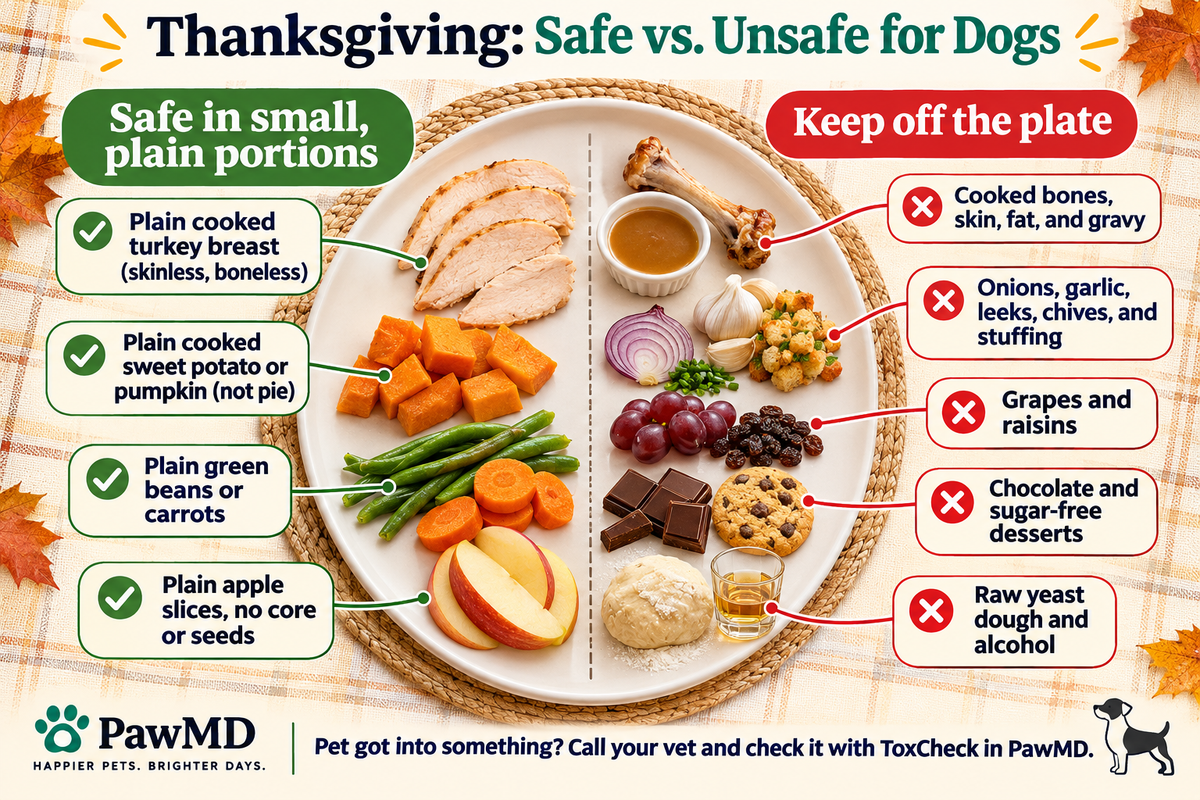
Plain cooked turkey breast, skinless, boneless, and unseasoned, is generally safe in a small portion. Skip the butter, salt, garlic, and onion, and make sure it's fully cooked. Raw or undercooked turkey can carry bacteria such as Salmonella. Plain cooked sweet potato or pumpkin (not pie filling), plain cooked green beans or carrots, and plain apple slices with the core and seeds removed are also fine in small amounts.
If your dog has a sensitive stomach, pancreatitis, or a special diet, ask your veterinarian first.
For cats, a tiny portion of the same plain foods can be fine, but cats are often even more sensitive to onions and garlic. Keep their bowls and the trash out of reach.
What Thanksgiving foods should dogs not eat?
Cooked turkey bones can splinter, choke a dog, damage the mouth or digestive tract, or cause a blockage.
Turkey skin, fat drippings, and gravy are rich and hard to digest. Even a small amount can upset the stomach, and in some dogs a fatty meal can trigger pancreatitis, a painful inflammation of the pancreas. Gravy is also often made with onions, garlic, or salty bouillon.
Stuffing frequently includes onions, garlic, leeks, chives, raisins, or grapes. Onions, garlic, leeks, and chives can irritate the stomach and damage red blood cells. Grapes and raisins can cause kidney damage in dogs, and there isn't a reliably "safe" amount.
Chocolate desserts are off the menu. See My Dog Ate Chocolate: What Do I Do?. Sugar-free pies, candy, and gum may contain xylitol, which can cause a dog's blood sugar to drop sharply and, in some cases, damage the liver. Treat anything sugar-free as urgent and call.
Raw yeast dough can expand in the stomach and produce alcohol as it rises. Alcohol in drinks or desserts can be dangerous even in small amounts.
What else should I watch out for?
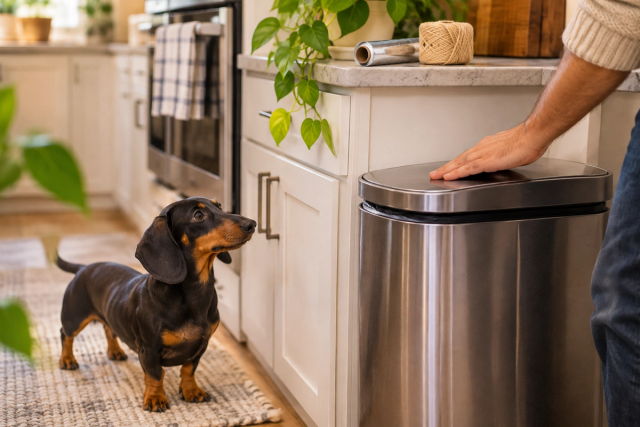
The trash can is often the biggest risk of the day. Bag the carcass, bones, skin, foil, and leftover dessert, and put them in a closed can outdoors or behind a closed door. Kitchen twine, string, and foil can be swallowed and cause a blockage, and corn cobs, from the table or a centerpiece, can get stuck if a dog chews them up.
Guests mean extra plates at dog height. A kind visitor may not know that skin and stuffing aren't a treat, so say so before dinner. Offer a quiet room if the house gets loud.
If your dog starts vomiting, has diarrhea, seems painful, or isn't acting like themselves, call your veterinarian. See our guides on vomiting or diarrhea and when to go to the emergency vet.
What if my dog already ate something they shouldn't?
Don't wait to see whether they look sick. Some problems, like chocolate or grape ingestion, can take hours to show up. Call your veterinarian or the nearest emergency hospital, and have a sense of what was eaten, roughly how much, when it happened, and your dog's weight. You can run the amount through ToxCheck while you make that call.
If you can't reach a veterinarian, an animal poison-control service can help:
- ASPCA Animal Poison Control Center: (888) 426-4435
- Pet Poison Helpline: (855) 764-7661
These services may charge a consultation fee. Don't try to make your dog vomit unless a veterinarian or poison expert tells you to.
How can PawMD help at Thanksgiving?
When something goes missing off a plate, details like your dog's weight can be hard to remember. The PawMD app keeps your pet's profile and records in one place, including ToxCheck, so you can estimate whether the amount is likely a concern for their size while you call your veterinarian. It's not a diagnosis, and it doesn't replace that call. PawMD also connects you with licensed veterinarians by chat, phone, or video.
Frequently Asked Questions
Can dogs eat turkey on Thanksgiving?
Yes, in a small amount, if it's plain, fully cooked, skinless, and boneless.
Can dogs eat mashed potatoes or stuffing?
Typical Thanksgiving versions are best skipped. Mashed potatoes are usually rich with butter, milk, or gravy, and stuffing often contains onions, garlic, or raisins.
Can dogs eat pumpkin pie?
No. Plain cooked pumpkin can be a fine small snack, but pie and pie filling are sweetened and spiced.
What if my dog ate turkey skin or gravy?
Call your veterinarian and tell them what was eaten and roughly how much. Skin, drippings, and gravy are high in fat and can upset the stomach or, in some dogs, trigger pancreatitis.
What if my dog got into the trash after dinner?
Call your veterinarian or an emergency vet and tell them what might be missing. Don't try to make your dog vomit unless a professional tells you to.
Are Thanksgiving leftovers safe for cats too?
A tiny piece of plain, cooked, boneless, skinless turkey is generally fine. Skip the same danger foods, especially onions and garlic, and call your veterinarian if your cat got into a plate or the trash.
The Bottom Line
A few plain bites can be a nice way to include your dog. Keep them small, unseasoned, and boneless, and leave the skin, bones, gravy, stuffing, and desserts for the people at the table.
The easiest Thanksgiving for a dog is the one where the good plate is boring, the trash can is closed, and nobody has to spend the night at the emergency clinic.
Related reading: My Dog Ate Chocolate: What Do I Do? · When to Take Your Pet to the Emergency Vet · Vomiting or Diarrhea in Dogs and Cats: What to Do and When to Worry
Sources
Holidays · Thanksgiving · Dogs · Cats · Toxins · Emergency
Related articles
- My Dog Ate Chocolate: What Do I Do?
Food, Nutrition & Toxins
- My Dog Ate Rat Poison: What Do I Do?
Food, Nutrition & Toxins
- Which Human Medications Are Poisonous to Pets?
Food, Nutrition & Toxins
This article is for general information and is not a substitute for veterinary advice. Contact a veterinarian if your pet is in distress or you are unsure what to do next.