
Which Human Medications Are Poisonous to Pets?
PawMD
October 30, 2026
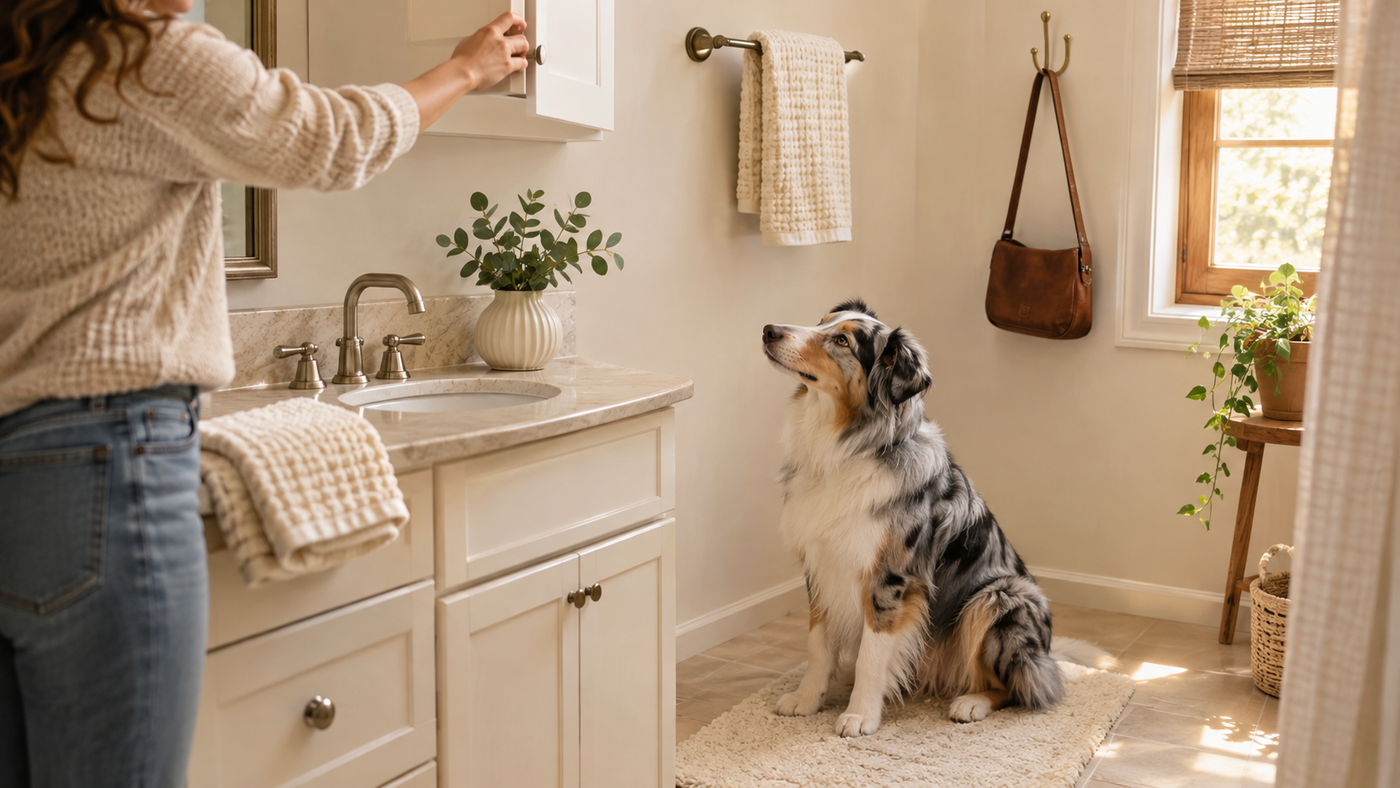
The weekly pill organizer is on the floor, and a few tablets are missing. Your dog looks perfectly pleased with themselves.
If your pet just ate a human medication, call your veterinarian or an emergency vet now, even if they seem fine. Ibuprofen, naproxen, acetaminophen (especially in cats), ADHD stimulants, antidepressants, nicotine products, and cannabis edibles can all cause serious problems, sometimes after only one or two pills. You can also use ToxCheck, PawMD's toxicity calculator, to check whether the amount is likely a concern for their size. It's not a diagnosis, so use it alongside that call, not instead of it. Don't try to make your pet vomit unless a veterinarian or poison expert tells you to.
Cats get into human medicines too, including pills that fall under a nightstand or get batted off a counter. The same advice applies: call right away, and bring the bottle or packaging if you can.
Which human pain relievers are dangerous for pets?
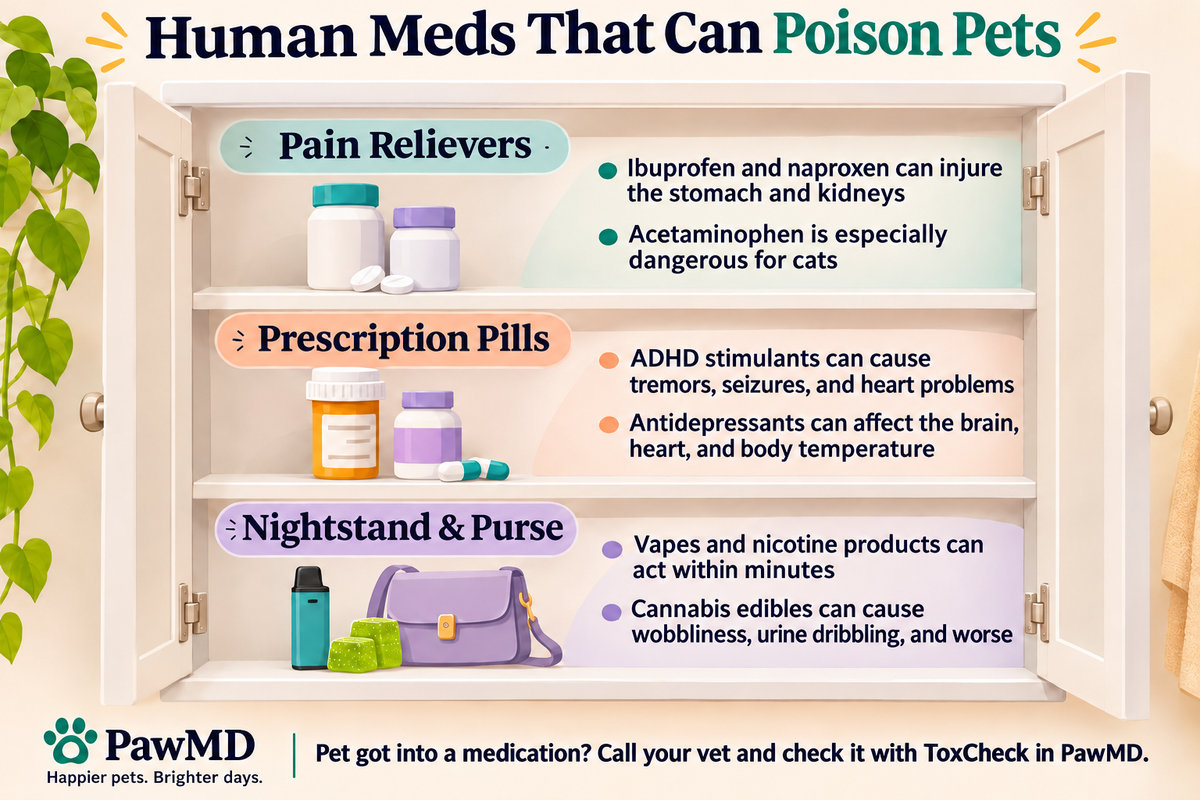
The short answer is that the pain relievers in most home medicine cabinets are not safe to share with a dog or cat.
Ibuprofen (brands such as Advil and some types of Motrin) and naproxen (Aleve) are NSAIDs, a group of drugs people take for pain, fever, and inflammation. In pets, even one or two pills can cause serious harm. They can irritate or ulcerate the stomach and intestines, and they can damage the kidneys. Signs may include vomiting, diarrhea, loss of appetite, abdominal pain, black or tarry stool, weakness, or just a pet who doesn't seem like themselves. At higher amounts, more serious problems, including effects on the nervous system, can follow. Cats are more sensitive than dogs to both of these drugs.
Acetaminophen (Tylenol) is especially dangerous for cats. Even one regular-strength tablet can be enough to damage a cat's red blood cells, which makes it harder for the blood to carry oxygen. It can also injure the liver. In cats, you might notice weakness, lethargy, trouble breathing, a brown or muddy color to the gums, swelling of the face or paws, or vomiting. Dogs can be poisoned too, especially if a larger amount is eaten or the exposure is repeated, and liver injury is a particular concern.
Aspirin can also cause stomach ulcers, liver injury, and other problems in pets, and cats are more sensitive to it than dogs.
Many cold, flu, and combination products mix acetaminophen or an NSAID with other ingredients, such as decongestants. Those extras can add their own risks, including agitation and changes in heart rate or blood pressure. If you're holding a box, don't try to sort out which ingredient matters most. Bring the whole package and let a professional do that.
Never give your pet a human pain reliever, leftover prescription, or over-the-counter tablet unless your veterinarian has specifically told you to. A dose that is ordinary for a person can be a poisoning in a dog or cat.
Why are ADHD medications and antidepressants a concern?
ADHD medications such as those containing amphetamines or methylphenidate (examples include Adderall, Concerta, and Ritalin) are potent stimulants. Even a small amount can cause life-threatening problems in a pet, including tremors, seizures, a dangerously high body temperature, and heart problems.
Antidepressants, including drugs such as fluoxetine (Prozac), escitalopram (Lexapro), duloxetine (Cymbalta), and venlafaxine (Effexor), are sometimes prescribed for pets at veterinary doses. An overdose is a different story. It can cause sedation, wobbliness, tremors, or seizures, and some of these drugs can also raise heart rate, blood pressure, and body temperature to dangerous levels. Cats in particular seem to like the taste of venlafaxine (Effexor) and may eat an entire tablet. Even one pill can cause serious poisoning.
If a pill bottle, a weekly organizer, or a guest's bag is open, these are two of the most important labels to look for. The specific drug name on the bottle is very useful to the veterinarian or poison-control service you call.
Are vapes, nicotine, and cannabis edibles dangerous for pets?
Yes. These often live on nightstands, coffee tables, and in purses, which is exactly where curious noses go.
Nicotine is highly toxic to dogs and cats. Pets can be exposed by chewing cigarettes, cigars, chewing tobacco, nicotine patches, e-cigarettes, or refill bottles. Liquid nicotine in vapes and e-cigarette refills can be absorbed quickly, and a refill bottle can hold far more nicotine than a single cartridge. Signs can appear rapidly, sometimes within 15 minutes, and may include vomiting, drooling, diarrhea, agitation, tremors, wobbliness, a fast heart rate, changes in breathing, weakness, or seizures. Chewing a vape can also cause burns or injury from the battery, plastic, metal, or glass, and a swallowed device can become a blockage. For more on vapes and edibles around Halloween, see Halloween Pet Safety: Candy, Costumes, and Door Dashers.
Cannabis edibles, such as brownies, gummies, and chocolates made with THC, look and smell like any other treat to a dog. There is no known safe amount of psychoactive marijuana for pets, and because dogs don't stop at one bite, they may swallow several human doses at once. More concentrated products raise the risk further. Common signs include trouble walking or standing, seeming unusually quiet or "out of it," dilated pupils, dribbling urine, and being extra sensitive to sound or touch. A slow heart rate or low body temperature can also occur. More serious signs, including low blood pressure, seizures, or difficulty breathing, are possible. Inhaled smoke can also affect pets.
If there's any chance your pet got into an edible, tell your veterinarian honestly. They're there to help your pet, not to judge, and knowing what was eaten helps them choose the right care. If the edible also contained chocolate, mention that too; see My Dog Ate Chocolate: What Do I Do?.
What should I do if my pet ate a human medication?
Take a breath. Looking this up was already the right move. Now let's keep things moving.
Get your pet away from whatever is left
Move your dog or cat away from any remaining pills, liquid, or device, and check whether another pet helped themselves. If you can do it safely, put what's left where no one can reach it.
Find the package
The bottle, blister pack, box, or a clear photo of the label is one of the most useful things you can have in hand. Try to piece together:
- The product name and active ingredients
- The strength (for example, how many milligrams per tablet)
- Roughly how many are missing, and whether it was a regular or extended-release form
- About when it was eaten
- Your pet's approximate weight
- Whether more than one pet may have been involved
If you're not sure how much is gone, assume the most it could be.
Call a veterinarian, and don't wait for symptoms
Don't wait to see whether your pet looks sick. Some problems take time to show up, and waiting can close the window when treatment helps most. Call your veterinarian or the nearest emergency veterinary hospital. You can run the amount through ToxCheck while you make that call.
If you can't reach a veterinarian, an animal poison-control service can help:
- ASPCA Animal Poison Control Center: (888) 426-4435
- Pet Poison Helpline: (855) 764-7661
These services may charge a consultation fee. In return, they can look at the product and your pet's size and help you decide whether it's reasonable to monitor at home or whether your pet needs to be seen.
Hold off on making your pet vomit
It's natural to want the medicine out as fast as possible. Please skip home remedies, including salt, hydrogen peroxide, or anything from your own cabinet, unless a veterinarian or poison expert specifically tells you to and walks you through it. Inducing vomiting is not always safe, and some substances can cause more harm coming back up.
If your pet is having trouble breathing, collapsing, having a seizure, bleeding you can't stop, or otherwise looks critically ill, head to an emergency clinic. See When to Take Your Pet to the Emergency Vet.
What might the veterinarian do?
A veterinarian will put the product, the amount, your pet's size, and any signs together and decide what comes next. That is not something you need to figure out at home.
Depending on what was eaten and how recently, they may recommend decontamination, bloodwork, fluids, medication to protect the stomach or other organs, or hospitalization for monitoring. Some poisonings look mild at first and still need follow-up tests, especially when the kidneys or liver could be involved.
None of this is a diagnosis you can make from a list of signs. The goal of the call is to get your pet the right next step quickly.
How can I keep medications away from my pets?
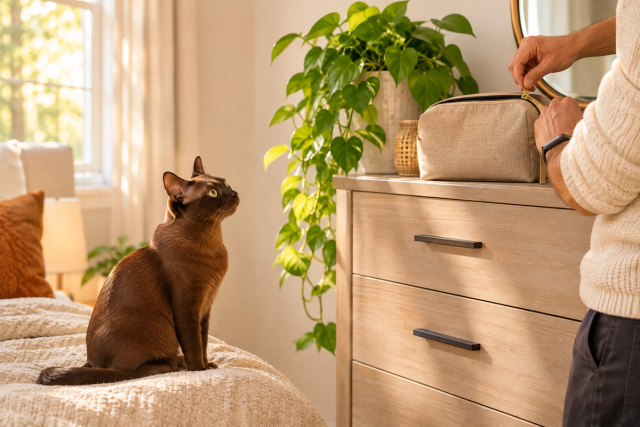
Most of these scares start in ordinary places: a nightstand, a kitchen counter, an open purse, a weekly pill organizer left on a table, or a visitor's bag on the floor.
Keep human medications in a closed cabinet, not in a plastic bag or an open organizer. If you use a weekly pill container, store it up high in a cabinet when you're not filling it. Hang purses and backpacks, and ask guests to keep their medicines, vapes, and edibles in a closed bag or cabinet, not on a nightstand or the coffee table.
Store your medications separately from your pet's medications. A common mix-up is giving a pet a human tablet by mistake because the bottles were side by side.
Child-resistant caps help, but they are not pet-proof. Dogs can chew through bottles, and cats can knock them down.
Human medications, rodent bait, and holiday foods are all easier for pets to reach when the house is busy. For seasonal hazards around the house, see What Are the Winter Holiday Hazards for Pets?. If you think your pet ate rodent bait rather than a medicine, see My Dog Ate Rat Poison: What Do I Do?.
How can PawMD help?
When pills go missing, details like your pet's weight and the exact product name can be hard to remember in a hurry. The PawMD app keeps your pet's profile and records in one place, including ToxCheck, so you can estimate whether the amount is likely a concern for their size while you call your veterinarian. It's not a diagnosis, and it doesn't replace that call. PawMD also connects you with licensed veterinarians by chat, phone, or video.
Frequently Asked Questions
What if my pet seems fine after eating a human medication?
Call your veterinarian anyway. Some medicines take time to cause visible signs, and treatment is often more effective before a pet looks sick.
Can I give my dog ibuprofen or Tylenol for pain?
Not unless your veterinarian has specifically told you to use a particular product and dose. Human pain relievers can cause serious stomach, kidney, liver, or blood problems in pets. Cats are especially sensitive to acetaminophen.
Is one pill really enough to be a problem?
It can be. Even one or two ibuprofen or naproxen tablets can seriously harm a pet, and a single regular-strength acetaminophen tablet can be dangerous for a cat. Some antidepressants and ADHD medications can also cause serious poisoning after a small amount. Don't try to do the math at home. Call.
What should I do if my pet chewed a vape or nicotine pouch?
Call your veterinarian or an emergency vet now, even if they seem fine. Bring the device or packaging if you can. Nicotine can act quickly, and the battery or pieces of the device can cause injury or a blockage.
Should I make my pet throw up?
Not unless a veterinarian or poison expert tells you to. Home methods can cause harm, and vomiting is not the right step for every toxin.
Do I need to tell the vet if I think it was a cannabis edible?
Yes. Be honest. Your veterinary team is there to treat your pet, and knowing what was eaten, including whether chocolate or another ingredient was involved, helps them give the right care.
The Bottom Line
If your dog or cat ate a human medication, a vape, or an edible, the next step is a phone call, not a waiting game. Bring the package if you have it, skip the home remedies, and let a veterinarian tell you whether your pet needs to be seen.
The quietest night after a medicine-cabinet scare is the one where you called early.
Related reading: My Dog Ate Chocolate: What Do I Do? · Halloween Pet Safety: Candy, Costumes, and Door Dashers · When to Take Your Pet to the Emergency Vet · My Dog Ate Rat Poison: What Do I Do?
Sources
- Pet Poison Helpline, "Human Medications Are Poisonous To Pets"
- Pet Poison Helpline, "Nicotine Poisoning in Pets"
- Pet Poison Helpline, "Marijuana"
- ASPCA, "Protect Your Pet: The Top 5 Toxic Dangers in Your Home"
- ASPCA, "The Poisons We Pack: Pet Hazardous Items Lurking in Your Bag"
- ASPCA, "Can Vaping Products Harm My Pet? ASPCA Poison Control Experts Explain!"
- ASPCA, "Keeping Pets Safe from Marijuana"
- Merck Veterinary Manual, "Poisoning from Human Over-the-Counter Drugs"
- Merck Veterinary Manual, "Poisonings from Human Prescription Drugs"
- ASPCA Animal Poison Control Center, (888) 426-4435
- Pet Poison Helpline, (855) 764-7661
Dogs · Cats · Toxins · Emergency · First Aid · Pet Safety
Related articles
- My Dog Ate Rat Poison: What Do I Do?
Food, Nutrition & Toxins
- What Can Dogs Eat on Thanksgiving?
Food, Nutrition & Toxins
- My Dog Ate Chocolate: What Do I Do?
Food, Nutrition & Toxins
This article is for general information and is not a substitute for veterinary advice. Contact a veterinarian if your pet is in distress or you are unsure what to do next.