
What Are the Winter Holiday Hazards for Pets?
PawMD
November 17, 2026
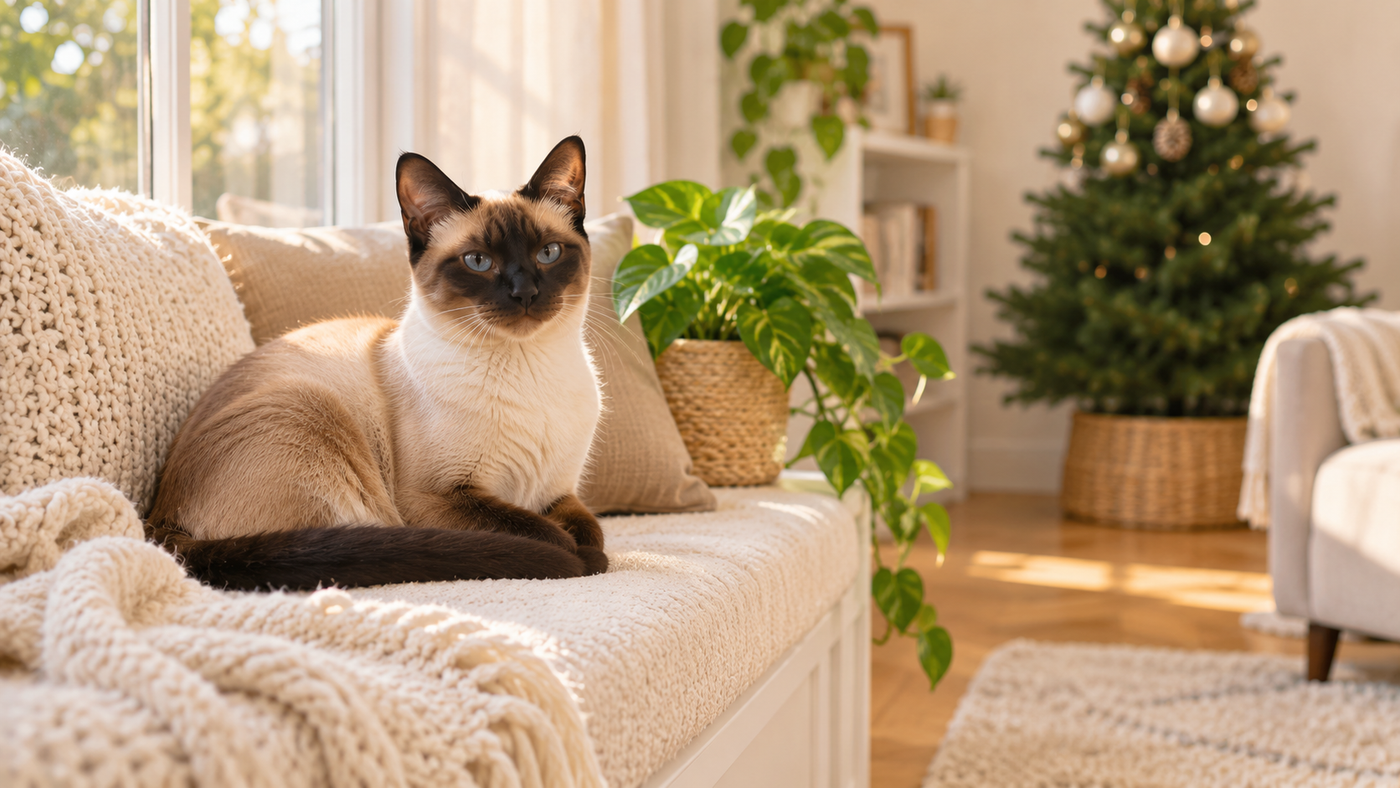
The tree just went up, a guest set a drink on the coffee table, and the cat has already discovered the tinsel.
From Thanksgiving through New Year's, the biggest risks for dogs and cats aren't only what's on the dinner plate. Decorations, holiday plants, leftover food, antifreeze, ice melt, and a busier house can all lead to a very un-festive visit to the emergency clinic. Most of these problems are preventable once you know where they hide.
If your pet already got into something they shouldn't, call your veterinarian or an emergency vet, even if they seem fine. You can also use ToxCheck, PawMD's toxicity calculator, to check whether the amount is likely a concern for their size. It's not a diagnosis, so use it alongside that call, not instead of it.
What holiday foods are dangerous for pets?
The short version is that most of the holiday table is not a pet treat. Fatty leftovers, skin, gravy, and cooked bones can upset the stomach or, in some dogs, trigger pancreatitis, a painful inflammation of the pancreas. Bones can also splinter or cause a blockage. Chocolate, grapes and raisins, onions and garlic, sugar-free sweets that may contain xylitol, raw yeast dough, and alcohol are all off limits.
If you want to share, keep it to a few small, plain bites. For a Thanksgiving plate specifically, see What Can Dogs Eat on Thanksgiving?. For chocolate, see My Dog Ate Chocolate: What Do I Do?.
The trash can is often the biggest food risk of the season. Bag the carcass, bones, foil, twine, and leftover dessert, and put them in a closed can your pet can't open.
Which holiday decorations should I
keep away from pets?
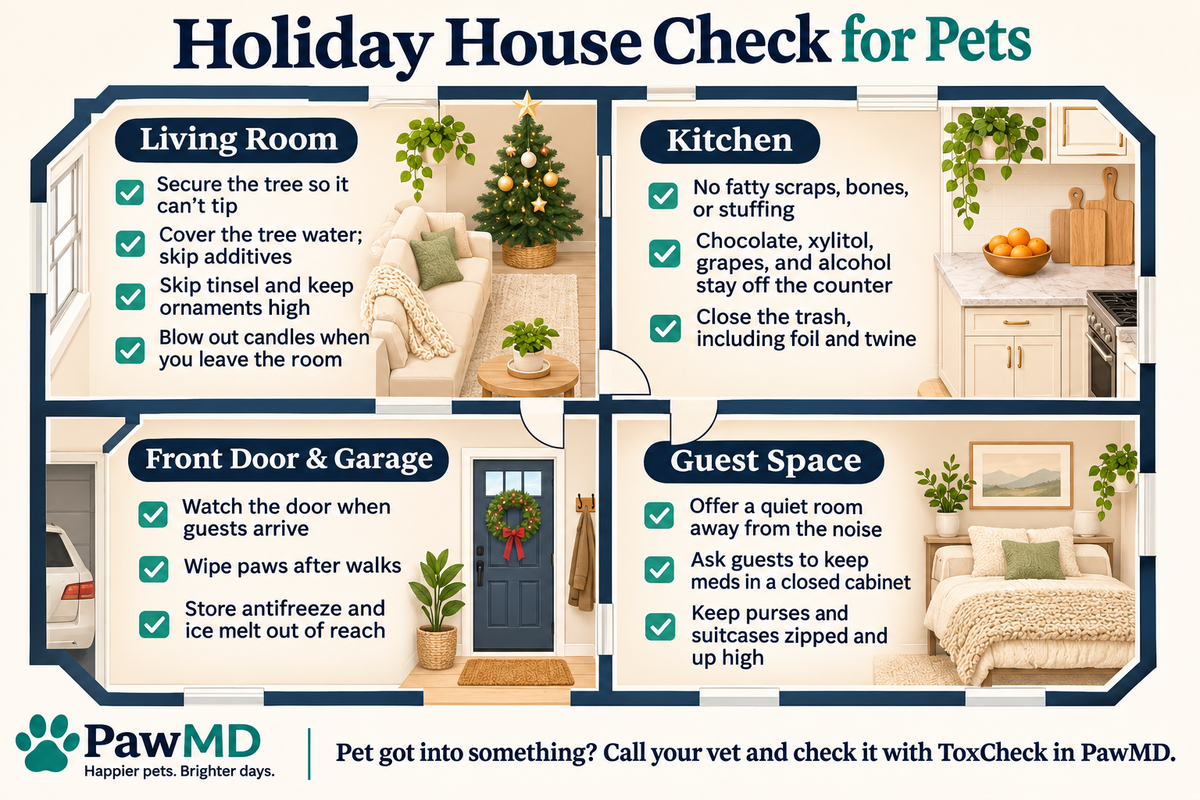
Tinsel, ribbon, and curling gift wrap are especially tempting for cats. If they're swallowed, these stringy materials can bunch up the intestines, cause severe vomiting and dehydration, and sometimes require surgery. If you think your cat swallowed tinsel or ribbon, call your veterinarian right away. It's better to skip tinsel altogether.
Ornaments, especially glass or salt-dough ones, can cut the mouth, cause a blockage if swallowed, or create a dangerous salt load. Hang breakable and edible-looking ornaments high, and pick up any that fall.
The Christmas tree itself can tip if a pet climbs it or tugs on the lights. Secure it so it can't fall, and keep the tree water covered. Don't add preservatives or other products to the water. Stagnant tree water can also grow bacteria that upset the stomach. Chewed pine needles can irritate the mouth or digestive tract.
Lights and cords can burn or shock a pet who chews them. Unplug decorations when you leave the room or the house. Batteries from toys, candles, and gadgets can burn the mouth and esophagus if punctured. Candles, menorahs, and oil lamps should never be left burning around unsupervised pets.
Some snow globes contain ethylene glycol, the same ingredient in many kinds of antifreeze. If one breaks, keep pets away, clean it up thoroughly, and call your veterinarian if you think they tasted the liquid.
Which holiday plants are toxic to dogs and cats?
Not every festive plant is equally dangerous, which is why it helps to know which one you're dealing with.
True lilies (such as Easter, Asiatic, stargazer, and Oriental lilies) and daylilies are a true emergency for cats. All parts of the plant are a concern, and even drinking the vase water or grooming pollen off their fur can be enough to cause serious kidney injury. If your cat may have been around one of these flowers, call your veterinarian or an emergency vet now. Don't wait to see whether they seem sick. Other plants that share the word "lily" in the name, such as peace lilies or Peruvian lilies, are usually less severe but can still irritate the mouth or stomach, so it's still worth a call.
Holly and mistletoe can cause stomach upset and, in some cases, heart problems. Amaryllis can also make pets sick. Poinsettias have a bigger reputation than they usually deserve: they typically cause mild to moderate stomach irritation rather than life-threatening poisoning, but they're still not a snack. When in doubt, keep holiday plants and bouquets out of reach, or choose a silk alternative.
Why is antifreeze so dangerous in winter?
Many antifreeze products contain ethylene glycol. It has a sweet taste that can attract pets, and even a small amount can be deadly for dogs and cats. It may also show up in unexpected places, including some snow globes.
Early signs can look a little like alcohol intoxication: vomiting, stumbling, sleepiness, and drinking or peeing more than usual. A dog may even seem to rally for a bit, then become much sicker as kidney failure develops. Cats can decline even faster.
If you think your pet licked a puddle in the driveway or garage, don't wait. Call your veterinarian or an emergency vet immediately, and bring the container if you have it. Treatment works best when it starts quickly, before the kidneys are damaged.
Clean up spills right away, store containers out of reach, and consider products made with propylene glycol, which is generally less toxic. Even then, keep pets away. "Less toxic" is not the same as safe.
What should I watch for on winter walks?
Ice melt and sidewalk salt can irritate paw pads and, if licked off the feet or eaten from the bag, can upset the stomach. In larger amounts, some products can raise sodium levels enough to cause tremors or seizures, and certain ingredients can burn the mouth. Pet-friendly ice melts are often a better choice, but they can still cause stomach upset, so keep the bag sealed and off the floor.
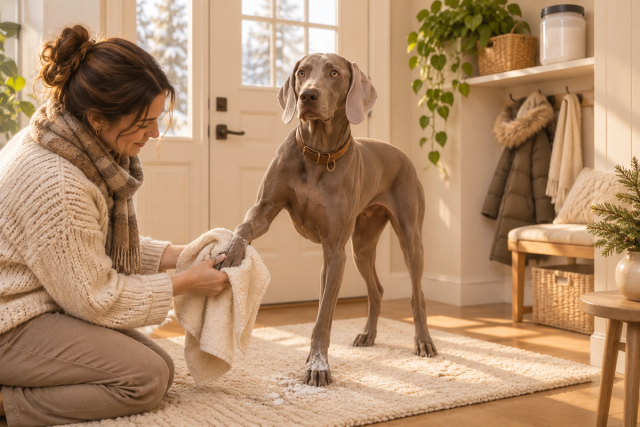
Wipe your pet's paws and belly when you come back inside, and don't let them eat treated snow or slush. A vet-approved paw balm or booties can help sensitive feet. If the pads look cracked, red, or painful, call your veterinarian.
Winter itself is a hazard for some pets. Short-haired dogs, small breeds, puppies, seniors, and pets with certain health conditions feel the cold faster. If your dog is shivering, slowing down, seeming weak, or looking for a place to burrow, get them inside. Don't leave pets alone in a parked car in cold weather, and keep cats indoors.
How do I keep my pet safe when guests come over?
A busy doorway is a classic escape route. Ask someone to watch the door while you take coats, and make sure your pet's collar tag and microchip information are current.
Guests also bring purses, suitcases, and pill organizers. Human medications are a common holiday poisoning, and a visitor may not think to put them away. Ask people to keep medicines in a closed cabinet, not on a nightstand or in an open bag.
Offer a quiet room away from the noise, with water, a bed, and a familiar toy. Some pets love a crowd. Others would rather skip the party, and that's fine.
Remind guests not to share leftovers, and clear plates and trash before anyone settles in for dessert.
What should I do if my pet already got into something?
Don't wait for signs to appear. Some problems, including antifreeze, lilies in cats, chocolate, and grapes, can take time to show up, and waiting can close the window when treatment helps most.
Call your veterinarian or the nearest emergency hospital. Have a sense of what was eaten, roughly how much, when it happened, and your pet's weight. If you can, bring the plant, wrapper, or product package. You can run the amount through ToxCheck while you make that call.
If you can't reach a veterinarian, an animal poison-control service can help:
- ASPCA Animal Poison Control Center: (888) 426-4435
- Pet Poison Helpline: (855) 764-7661
These services may charge a consultation fee. Don't try to make your pet vomit unless a veterinarian or poison expert tells you to.
If your pet is having trouble breathing, collapsing, having a seizure, or bleeding and you can't stop it, head to an emergency clinic. See When to Take Your Pet to the Emergency Vet. For vomiting or diarrhea after a holiday meal, see Vomiting or Diarrhea in Dogs and Cats: What to Do and When to Worry.
How can PawMD help during the holidays?
When something goes missing off a plate or a decoration is chewed, details like your pet's weight can be hard to remember. The PawMD app keeps your pet's profile and records in one place, including ToxCheck, so you can estimate whether the amount is likely a concern for their size while you call your veterinarian. It's not a diagnosis, and it doesn't replace that call. PawMD also connects you with licensed veterinarians by chat, phone, or video.
Frequently Asked Questions
Are poinsettias poisonous to dogs and cats?
They can cause mild to moderate stomach irritation, but they are usually less dangerous than their reputation suggests. Keep them out of reach anyway, and call your veterinarian if a large amount was eaten or your pet isn't acting like themselves.
Is tinsel dangerous for cats?
Yes. Swallowed tinsel or ribbon can cause a serious intestinal blockage and may require surgery. It's safest to leave tinsel off the tree.
Can dogs or cats drink Christmas tree water?
It's best not to let them. Tree water can contain preservatives, and even plain water that has been sitting in the stand can grow bacteria that upset the stomach. Cover the reservoir.
What if my cat ate a lily or lily pollen?
Call your veterinarian or an emergency vet now. True lilies and daylilies can cause serious kidney injury in cats, and vase water or pollen can be enough. Don't wait to see whether your cat seems sick.
What should I do if my pet may have licked antifreeze?
Call your veterinarian or an emergency vet immediately, even if they seem fine. Bring the container if you have it. Even a small amount can be dangerous.
How can I keep my pet from bolting when guests arrive?
Station someone at the door, offer a quiet room away from the entry, and make sure your pet's ID tag and microchip details are up to date.
The Bottom Line
The holidays are easier on pets when the tree is secure, the tinsel stays in the box, the leftover turkey goes in a closed can, and antifreeze never makes it onto the garage floor.
A little planning now is a lot less stressful than a late-night drive to the emergency clinic.
Related reading: What Can Dogs Eat on Thanksgiving? · My Dog Ate Chocolate: What Do I Do? · When to Take Your Pet to the Emergency Vet · Halloween Pet Safety: Candy, Costumes, and Door Dashers
Sources
- AVMA, "Winter holiday pet safety"
- ASPCA, "Holiday Safety Tips"
- ASPCA, "Which Lilies Are Toxic to Pets?"
- ASPCA, "Cold Weather Safety Tips"
- ASPCA, "Digging Deeper: Getting the Facts on the Dangers of Antifreeze and Your Pets"
- ASPCA, "Keeping Pets Safe during Winter: The Dangers of Ice Melts"
- Merck Veterinary Manual, "Ethylene Glycol (Antifreeze) Poisoning"
- ASPCA Animal Poison Control Center, (888) 426-4435
- Pet Poison Helpline, (855) 764-7661
Holidays · Toxins · Emergency · Dogs · Cats · Pet Safety · First Aid
Related articles
- My Dog Swallowed a Sock or Toy: What Do I Do?
First Aid & Emergencies
- When to Take Your Pet to the Emergency Vet
First Aid & Emergencies
- Halloween Pet Safety: Candy, Costumes, and Door Dashers
First Aid & Emergencies
This article is for general information and is not a substitute for veterinary advice. Contact a veterinarian if your pet is in distress or you are unsure what to do next.